


Baling wire secures highly compressed recyclable materials into dense, stackable blocks for transport and processing. Selecting the right wire ensures the bale remains intact from the processing facility to the final buyer, preventing costly material loss or rejection at the mill. Understanding the relationship between waste fractions, compaction force, and tying consumables is essential for any modern recycling operation.
If you observe how a baler works, the tying phase acts as the critical final step that locks in the applied hydraulic pressure. Operators often focus entirely on machine specifications, ignoring that the final commodity buyer dictates the required wire standard. Navigating these requirements demands a clear view of the downstream supply chain.
With over 25 years of experience manufacturing robust channel baling presses at ANIS, we frequently guide material recovery facilities (MRFs) through this exact selection process. We know that optimizing your output requires matching the consumable tie directly to both the machinery you operate and the commodity you sell.
What is the best baling wire for my baler?
The best baling wire depends entirely on your baler type and the downstream buyer’s specifications. Vertical balers typically require pre-cut single loop ties, while auto-tie channel balers use continuous stem coil or box wire. The exact finish and gauge are determined by the specific material you compress.
What baling wire is and what it has to do
Baling wire, also called baler wire, bale wire, or a bale tie, acts as the structural envelope for compacted secondary raw materials. It must possess enough tensile strength to resist the immediate expansion force of the material once the baler ram retracts. Beyond simple containment, it serves to optimize logistics, allowing multi-material bales to be stacked safely inside shipping containers and full truck loads.
What does the bale buyer actually require?
Bale buyers require specific wire types to ensure their own processing equipment is not damaged by prohibitive materials. You must reverse engineer your wire choice starting from the mill or reclaimer that purchases your commodity. If a processor receives a PET bale bound with a wire that contaminates their chemical washing process, they will reject the entire load, regardless of how perfectly the bale was formed.
A frequent error occurs when recycling centers switch materials without consulting their buyers’ inbound quality guidelines. The structural integrity and chemical composition of the binding agent directly impact the profitability of both the seller and the buyer.
APR model bale specifications for plastics
The plastics recycling industry demands strict adherence to non-corrosive tying standards to protect their extrusion and washing equipment. When dealing with plastic fractions, standard black wire can rust and contaminate the shredded flakes. We always instruct our partners to consult the primary industry standards before shipping.
The APR model bale specifications are highly specific regarding binding methods. They state that bales should be held together with 10 to 12 gauge, noncorrosive galvanized metal wire, with all bale wires wrapped in one direction (Source: Association of Plastic Recyclers). Non-wire bindings are strictly prohibited in these streams.
ReMA paper stock guidelines for fibre
Paper mills processing Old Corrugated Containers (OCC) and mixed paper have completely different requirements compared to plastic reclaimers. Fibre buyers generally accept standard black annealed ties, provided the wire is easily identifiable and safely removable before the pulping phase. The ReMA paper stock guidelines outline exact permissible tolerances for packaging materials.
Because paper bales exert significant memory expansion, the wire must have adequate elongation properties to stretch slightly without snapping when the paper absorbs ambient humidity during transit.
What is baling wire made of?
Baling wire is made of carbon steel. Standard black annealed wire uses low-carbon steel, commonly 1018 grade, which stays soft enough for knotters and manual twisting while holding a formed bale. High-tensile wire and double loop ties use high-carbon steel such as 1060 or 1080 grade, giving them the extra torsional strength that dense, high-rebound fractions demand (Source: Baling Wire Direct).
Steel dominates industrial baling because it pairs high tensile strength with enough ductility to survive automated tying and rough forklift handling. That same steel core is then either coated with zinc (galvanized) for corrosion resistance or heat treated (annealed) for flexibility, so a single 1018 or 1080 grade can reach the tying head in very different finishes.
Wire finishes: galvanized versus black annealed
The finish of the wire dictates its corrosion resistance, flexibility, and suitability for different environments. Processors usually choose between galvanized baling wire, which features a protective zinc coating, and black annealed baling wire, which undergoes a thermal treatment process to increase flexibility.
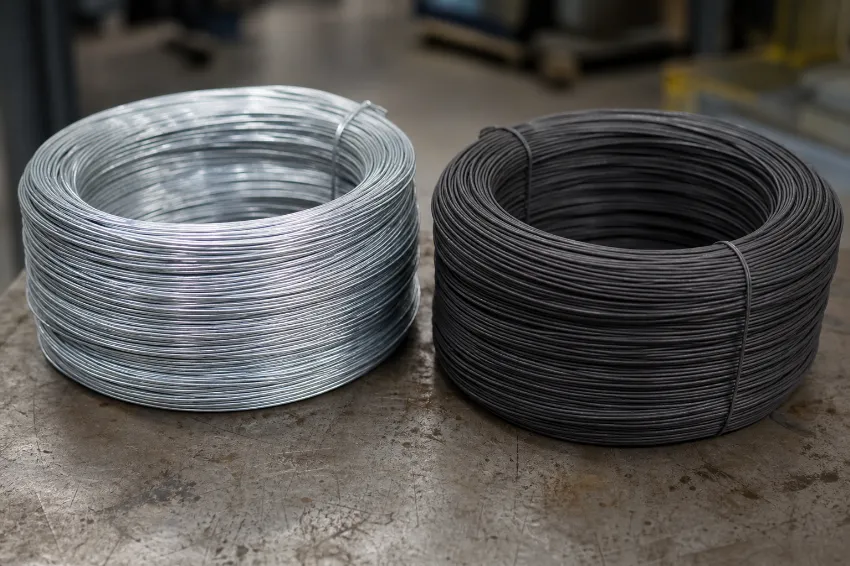
The annealing process changes the microstructure of the steel, making it softer and easier for manual operators to twist or for automated knotters to manipulate. Conversely, galvanization creates a robust barrier against the elements. ASTM A641/A641M-19 covers soft, medium and hard temper zinc coated galvanized carbon steel wire in coils for general use (Source: ASTM International).
| Finish type | Coating / process | Best used for |
|---|---|---|
| Black annealed | Thermal treatment (controlled cooling) | Cardboard, paper, indoor storage, manual tying |
| Hot-dipped galvanized | Zinc coating applied via molten bath | Plastics, outdoor storage, corrosive environments |
Wire formats: single loop ties, box wire and stem coil
Consumables are packaged in various formats to match the feed mechanisms of different pressing machinery. Understanding the distinction between single loop bale ties vs box wire prevents downtime caused by loading the wrong format into the machine.
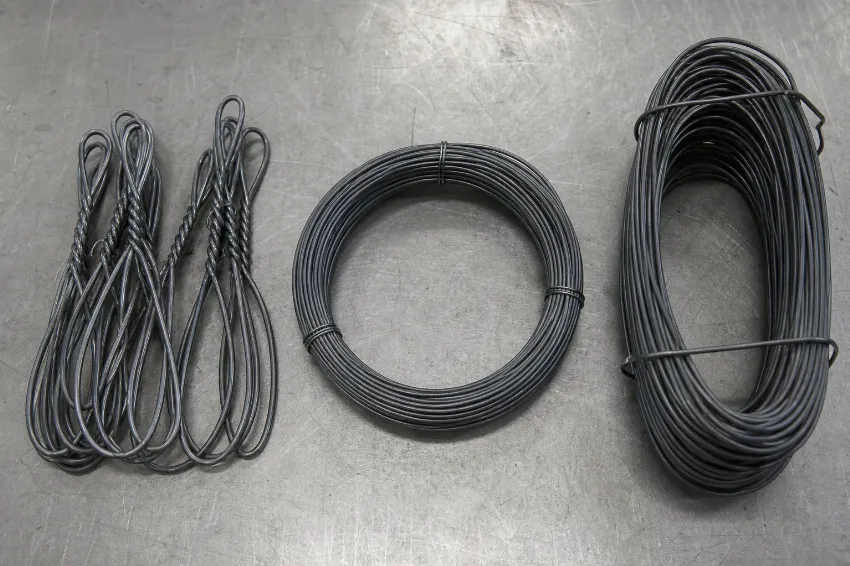
- Single loop ties: Pre-cut lengths of wire featuring a twisted loop at one end. Operators thread the straight end through the loop and tie it by hand.
- Box wire: Continuous wire packaged in 50 lb or 100 lb cartons. It feeds directly into the auto-tier of smaller horizontal channel balers.
- Stem coil: Massive continuous spools mounted on heavy-duty carrier stands with dedicated wire coil holders and a hydraulic wire tensioner. These sustain high-capacity MRF operations running continuous sorting lines without frequent reloading interruptions.
How gauge, tensile strength and elongation work together
Tensile strength PSI is the maximum stress a baler wire can withstand while being pulled before it breaks. High tensile strength keeps heavy, expanding materials contained, while elongation provides the necessary stretch to absorb sudden shocks during mechanical handling.
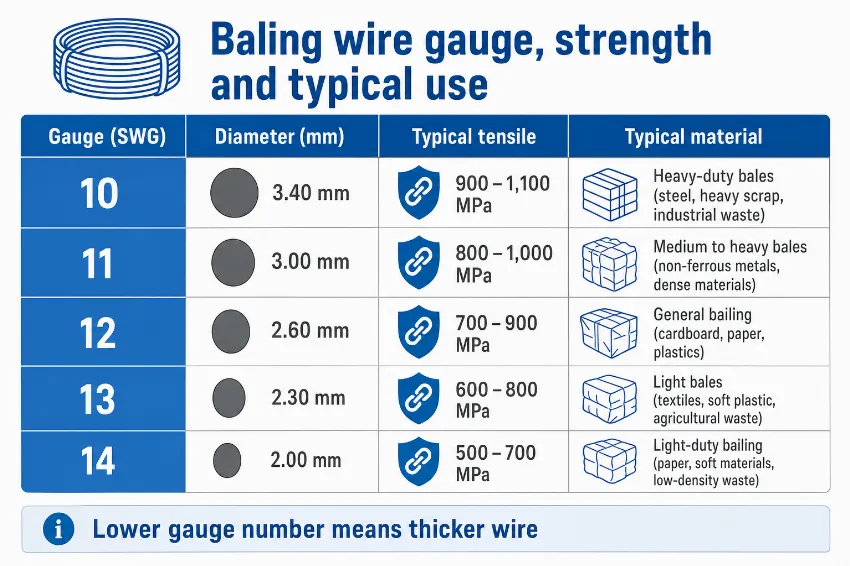
The gauge refers to the thickness of the wire, typically ranging from 10 to 16. A lower number indicates a thicker wire. When calculating the right thickness, you must balance the expansion force of the material against the capabilities of your equipment. A detailed baling wire gauge chart helps pinpoint the exact intersection of these metrics. For cardboard, a 12 or 13-gauge wire usually offers the perfect equilibrium of strength and flexibility.
Matching wire to your baler architecture
Balers dictate the physical format and mechanical properties of the wire you must purchase. A heavy-duty scrap metal baler requires different binding logic than a small retail cardboard press. In our practice supplying customized baling presses globally, we frequently encounter cases where operators attempt to use inappropriate wire formats, leading directly to excessive wear on the tying heads.
Manual tie vertical balers
Manual tie vertical balers require human operators to thread and secure the bindings. These machines exclusively use pre-cut single loop ties. Because operators manipulate the ties by hand, a softer, more pliable black annealed finish is strongly preferred to prevent hand fatigue and ensure a tight, secure twist.
Auto-tie channel balers
Auto-tie channel balers automate the binding process using a complex mechanical assembly. The system drives a needle through the compressed material, threading the wire toward the knotter, which then twists and cuts the continuous feed. These machines rely on stem coil or box wire formats.
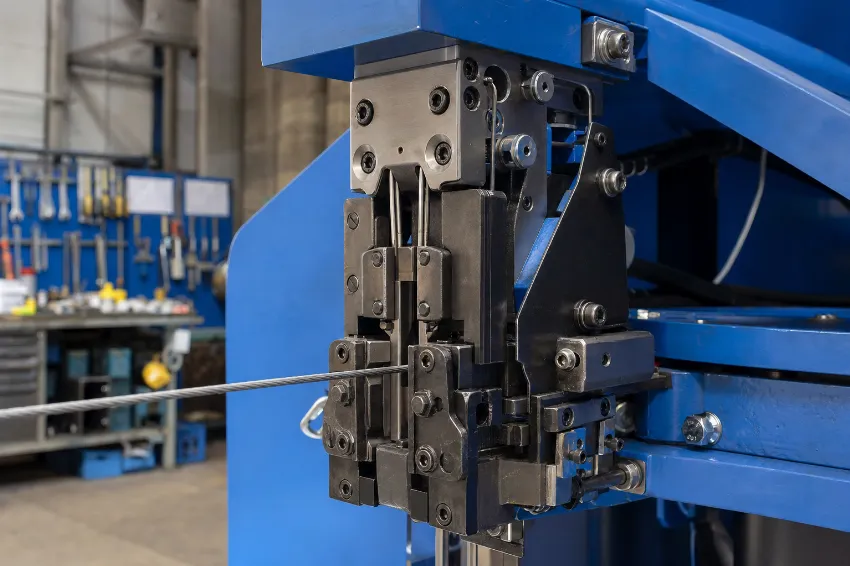
For an automatic baler wire tying system to function correctly, the wire must have precise tensile consistency. This rule applies in most cases, except when handling extremely dense multi-material fractions in confined MRF spaces, where switching from standard stem coils to specialized high-tensile wire prevents knotter jams during continuous operation. If the knotter still misties or snaps wire, our baler wire tier troubleshooting guide walks through the most common causes.
How much wire does a bale need?
The required amount of wire per bale depends on the expansion memory of the material and the physical dimensions of the chamber. Standard mill-sized cardboard bales typically require four to six horizontal wires to maintain structural integrity. Plastic fractions with higher rebound forces might demand cross-tying or thicker gauge applications.
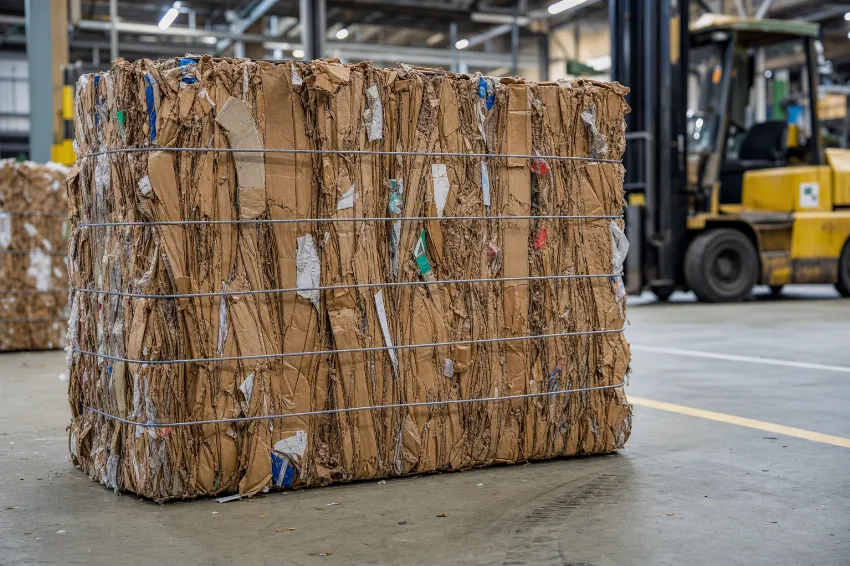
The volume of consumable used directly affects the running cost of every bale. Furthermore, sellers must understand wire tare deduction, the industry practice where buyers subtract the estimated weight of the metal ties from the gross payload. Knowing how much a bale weighs precisely allows you to calculate accurate net weights for invoicing, ensuring you do not lose margins on packaging tare.
Summary of baling wire selection
Selecting the optimal wire spec requires working backward from the end of the supply chain. You must first identify what your downstream buyer mandates, whether that means galvanized ties for plastics or black annealed for OCC. Then, match those chemical and strength requirements to the mechanical feeding system of your specific baler architecture. The right combination of gauge, finish, and format reduces machine downtime, ensures optimal truck loading, and guarantees buyer acceptance.
Frequently asked questions
What gauge wire is best for cardboard?
For standard cardboard (OCC) bales, 12-gauge or 13-gauge wire is typically the best choice. This thickness provides sufficient tensile strength to hold the expanding fibre while remaining flexible enough for secure knotting.
Is baling wire recyclable?
Yes, baling wire is fully recyclable. Most paper mills and plastic reclaimers use specialized cutting equipment to remove the metal wires before processing, subsequently sending the accumulated steel off for scrap metal recycling.
Can one wire type run on both vertical and auto-tie balers?
No, vertical balers require pre-cut single loop ties for manual application, whereas auto-tie channel balers require continuous wire formats like stem coils or box wire to feed through their automated knotter systems.
Is baler wire the same as baling wire?
Yes. Baler wire, bale wire, and bailing wire all name the same product: the steel tie that holds a compressed bale together. Bailing wire is simply a common misspelling of baling wire. Whatever term your supplier prints on the box, the specifications that matter are the gauge, tensile strength, and finish, not the name.
Are you unsure which consumable format ensures the best return on investment for your MRF? Contact our experts at ANIS to determine exactly which wire spec and tying system suits your specific baler and your downstream bale buyer.