


In the high-pressure world of waste management and recycling, the efficiency of your operation often hinges on a single, complex mechanical sequence: the tying cycle. While the hydraulic ram does the heavy lifting of compressing material, it is the automatic baler wire tying system that ensures the product remains contained, stackable, and transportable. Without a reliable tying unit, even the most powerful baler is essentially just a trash compactor that requires manual intervention.
At ANIS Trend, we understand that understanding the intricacies of this mechanism is vital for maintenance teams and facility managers. A deep knowledge of how needles interact with twisting hooks not only helps in troubleshooting “mis-ties” but also prolongs the lifespan of your capital equipment. For those looking to upgrade or understand the broader context of these machines, you can explore our range of channel baling presses, where these advanced tying systems are a standard, integrated feature. 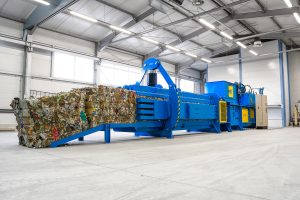
How does an automatic baler wire tying system work?
The system utilizes hydraulically or electrically driven needles to pull wire through slots in the compressed bale. Once the wire encircles the material, a twisting mechanism (hook) catches the overlapping wire ends, rotates rapidly to form a secure knot, and a cutter separates the loop, allowing the bale to eject while simultaneously preparing the wire for the next cycle.
Understanding the automatic baler wire tying system
To the untrained eye, the back end of a channel baler looks like a blur of steel and wire. However, this subsystem is a marvel of synchronization. The automatic tying unit is designed to operate without stopping the continuous feed of material, a feature that distinguishes fully automatic channel balers from semi-automatic or vertical models.
The critical role of tying in waste management
In modern recycling facilities, throughput is the primary metric of success. If a baler stops because a wire failed to tie, the entire conveyor line backs up. The tying system must execute a perfect cycle in a matter of seconds. We see this as the heartbeat of the baler; if it skips a beat, the facility suffers immediate downtime. The goal is to produce a bale that can withstand the internal expansion pressure of materials like PET bottles or HDPE plastic without bursting.
Key components of a standard tying unit
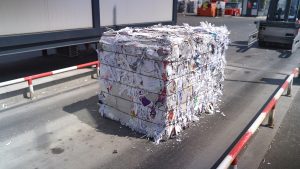 Regardless of the specific brand, most horizontal wire tiers share common anatomical features essential for operation:
- Needle Assembly: Large steel arms that thread the wire through the bale slots.
- Twister Hooks: Precision-machined hooks that grab the wire and rotate to create the knot.
- Wire Cutters: Hardened steel blades that sever the wire once the knot is formed.
- Wire Guides and Rollers: These ensure the wire travels smoothly from the stand to the needle without kinking.
Efficiency gains compared to manual strapping methods
Transitioning from manual strapping to an automated system changes the economics of a facility. Manual strapping requires an operator to be present, posing safety risks and significantly slowing down production—often limiting output to 2-3 bales per hour. In contrast, an automated system allows for continuous extrusion, enabling high-capacity channel balers to produce anywhere from 10 to over 60 tons per hour, depending on the material and machine size.
How reliable tying impacts overall facility throughput
Reliability is mathematics, not magic. If a facility produces 20 bales per hour and experiences a mis-tie rate of 5%, that equals one failed bale every hour. Correcting a failed bale can take 15 to 30 minutes of dangerous manual work inside the channel. Therefore, a robust tying system doesn’t just save wire; it preserves hours of operational time daily, directly influencing the profitability of the plant.
The mechanics behind the tying process explained
The physics involved in securing a bale are precise. The system must manipulate stiff steel wire with the dexterity of human fingers but with the force of hydraulic machinery. (Source: Open Source Ecology).
How the needle assembly feeds wire through the bale
The cycle begins when the bale reaches the desired length. The main ram holds the pressure against the material. Simultaneously, the needle assembly (often carrying 4 or 5 needles horizontally or vertically) swings through the slots in the press ram. These needles carry the bottom wire up (or across) to meet the top wire, effectively “sewing” through the compressed waste.
The physics of the twisting hook mechanism
This is the most delicate part of the operation. As the needle brings the wire into the tying head, the twister hook rotates. It must catch both the wire coming from the needle and the wire end held in the gripper. The hook then spins—typically 3 to 4 times—twisting the wires around each other. This friction-based bond is what holds tons of expansive force.
Precise cutting and securing of the wire knot
Once the twist is complete, the knot is physically locked. However, the wire is still continuous from the spool. A cutting blade, synchronized with the twister shaft, severs the connection. Crucially, the system must immediately grip the cut end of the incoming wire to prepare for the *next* bale, ensuring the process is cyclical.
Synchronization between the ram and the tying cycle
Timing is everything. If the needles enter the chamber before the ram has fully cleared the slots, catastrophic damage occurs. Modern ANIS balers use advanced position sensors to ensure the ram is in the exact “tying position” before the needles are authorized to move. This electronic handshake prevents mechanical collisions.
Differences between horizontal and vertical tying orientations
We often recommend different orientations based on the material:
| Orientation | Best For | Advantage |
|---|---|---|
| Vertical Tying | General waste, Cardboard | Gravity helps keep the wire slots clear of debris; often easier to service. |
| Horizontal Tying | PET, Plastics, RDF | Prevents small debris from falling into the tying unit; wires are less likely to fall off expanding bales. |
Ensuring bale stability and structural integrity
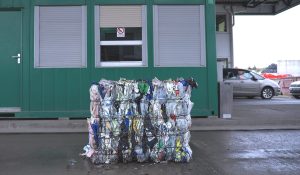 A bale is only safe if it holds its shape. Poorly tied bales are a massive safety hazard during transport and stacking.
The importance of proper tension settings
The wire must be pulled tight against the bale before twisting. If the tension is too loose, the bale will expand significantly upon ejection, potentially snapping the wires due to shock loading. Conversely, if the tension is too high during the tie, the wire may snap before it even leaves the chamber.
How the number of ties correlates with material density
There is a direct correlation between bale density and the required number of wires. For standard cardboard, 4 wires are usually sufficient. However, for high-rebound materials like foam or high-density RDF (Refuse Derived Fuel), a 5-wire system is necessary to distribute the expansive load. Using fewer wires on dense material increases the risk of wire failure by 50% or more.
Preventing bale expansion and bursting during transport
Materials behave differently after compression. Plastics tend to have “memory” and will try to return to their original shape aggressively. To combat this, the tying system must produce a tight, compact knot that minimizes “slack.” Every millimeter of slack in the knot translates to centimeters of expansion in the bale.
Safety implications of loose or broken wires
A bursting bale can weigh over a ton and release energy explosively. According to industry safety reports, unstable bales are a leading cause of crush injuries in warehouses. Ensuring the tying unit is functioning correctly is a fundamental safety protocol, not just an operational one. (Source: HSA).
Optimizing knot strength for heavy-duty applications
The strength of the knot is determined by the number of twists and the ductility of the wire. Generally, a knot with 3.5 to 4 twists offers the optimal balance. Fewer twists may slip; more twists can work-harden the metal, making it brittle and prone to snapping at the neck of the knot.
Selecting the right wire for your operations
Even the best automatic baler wire tying system will fail if fed with inferior consumables. Wire selection is a strategic decision.
Differences between galvanized and black annealed wire
Black Annealed wire is heat-treated to be flexible (ductile) and has an oiled surface to reduce friction in the guides. It is the industry standard for most applications. Galvanized wire is used where bales will be stored outdoors; the zinc coating prevents rust, which can degrade the wire strength over time, though it is generally more expensive and slightly stiffer.
Matching wire gauge to the specific waste stream
Using a thin wire on a heavy bale is a recipe for disaster.
- 3.4mm – 3.9mm: Heavy-duty use (PET, High-density output).
- 3.0mm – 3.2mm: Standard cardboard and paper.
- Below 2.8mm: Generally discouraged for automatic channel balers due to snapping risks.
Impact of wire quality on the automatic baler wire tying system
Inconsistent wire diameter or tensile strength is a silent killer of productivity. “Budget” wire often varies in thickness, causing it to jam in the needle tips or slip out of the twister hook. We always advise clients that saving pennies on wire usually costs euros in downtime.
Proper storage conditions to prevent wire corrosion
Wire should be stored in a dry, roofed area. Rusty wire acts like sandpaper, rapidly wearing down the wire guides and needles. If the wire is black annealed, the oil coating can dry out if left too long, increasing friction and causing mis-ties.
Economic considerations when choosing consumables
Calculate the cost per bale, not the cost per coil. High-quality wire allows you to run faster with fewer interruptions. If a premium wire reduces your mis-tie rate from 5% to 0.5%, the return on investment is immediate through increased plant availability.
Common tying issues and troubleshooting solutions
When things go wrong, a systematic approach is better than guesswork. Here are the most frequent issues we encounter.
Diagnosing the most frequent causes of mis-ties
Operators should look at the wire ends to diagnose the fault.
- Straight ends with no twist: The gripper failed to hold the wire, or the needle didn’t reach the twister.
- Twisted but snapped: Tension was too high, or the wire is too brittle.
- Knot loops stuck on hook: The cutter or stripper mechanism failed to eject the knot.
Clearing debris buildup from the needle slot and guides
The most common culprit is trash. Small pieces of plastic or paper get jammed in the needle slots (the path the needle travels). Regular cleaning with compressed air is essential. If the needle hits debris, it can deflect, missing the twister hook entirely.
Addressing twister hook misalignment
The gap between the needle roller and the twister hook must be precise (often 1-2mm). Over time, vibrations can shift these components. A regular check with feeler gauges ensures the hand-off remains accurate.
Solving hydraulic pressure inconsistencies
If the hydraulic pressure driving the twisting motor fluctuates, the knot may not be completed, or the cutter may not activate with enough force. Checking the hydraulic solenoid valves and pump pressure is a standard troubleshooting step.
Strategies to prevent wire snapping during the cycle
Ensure the wire path from the stand to the baler is smooth. Worn ceramic guides or grooved steel rollers can create drag, causing the wire to snap under the tension of the needle pull.
Maintenance best practices for long-term reliability
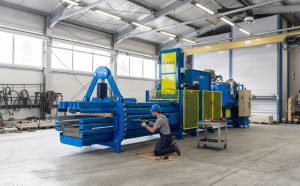 A proactive maintenance plan changes the tying unit from a liability to an asset.
Routine cleaning schedules for the tying unit head
We recommend a “blow-down” of the tying head at the end of every shift. Removing dust and grit prevents them from mixing with grease to form an abrasive paste that eats away at moving parts.
Critical lubrication points to prevent mechanical wear
While the wire itself provides some lubrication, the mechanical pivot points, gears, and slides of the tying unit require high-quality grease. However, avoid over-greasing the actual twisting hook area, as this can cause the wire to slip out of the grip.
Identifying signs of wear on cutters and twisting hooks
Inspect the cutters weekly. A dull cutter mashes the wire rather than slicing it, leaving frayed ends that get stuck. Twister hooks should be checked for grooves worn by the wire; deep grooves can prevent the knot from sliding off.
Benefits of an automatic baler wire tying system maintenance plan
Scheduled downtime for maintenance is always cheaper than unscheduled downtime for repairs. A maintenance plan ensures that wear parts are replaced before they fail.
Stocking essential spare parts to minimize downtime
Every facility should have an “emergency kit” for their tier. This should include:
- 1 set of replacement cutters.
- 1 replacement twister hook.
- Wire guide rollers.
- Proximity sensors.
Why ANIS tying technology stands out in the industry
At ANIS, we have refined our tying systems based on decades of field data from the toughest recycling environments.
The engineering behind ANIS rapid tying mechanisms
Our systems are designed for speed without sacrificing precision. By optimizing the hydraulic flow and reducing the mechanical mass of the needle assembly, we achieve faster cycle times, allowing the baler to return to compression mode sooner.
Enhancing durability for high-volume recycling plants
We use high-grade, hardened steel for all ground-engaging parts of the tier. Where others use standard alloys, we use materials capable of withstanding the abrasive nature of RDF and dirty plastics.
Intelligent monitoring and error detection features
Our modern balers include intelligent monitoring that can detect a mis-tie instantly. The operator is alerted via the display panel, often indicating exactly which wire position failed, reducing diagnosis time from minutes to seconds.
Adaptability to diverse materials and bale sizes
Our tying units are versatile. Whether you are baling spongy foam or dense paper, the tension and twist parameters can be adjusted to suit the material characteristics, ensuring a perfect bale every time.
Reducing operational costs through robust design
Ultimately, our design philosophy centers on “Total Cost of Ownership.” By building a tying system that requires fewer spare parts and causes fewer stoppages, we lower the operational cost per ton for our clients.
Summary
The automatic baler wire tying system is the linchpin of channel baler operations. From the synchronization of the needles to the physics of the twisting hook, every component must function in harmony to ensure safety and efficiency. Proper maintenance, correct wire selection, and understanding the mechanics of the knot are essential for any facility manager. At ANIS, we pride ourselves on delivering tying technology that is not only robust but also intelligent, ensuring your recycling plant runs at peak performance.
Frequently Asked Questions
Why does my baler wire keep breaking at the knot?
This is usually due to excessive tension during the twist or the knot having too many twists, which makes the wire brittle. Check your twister settings and ensure you are using wire with the correct tensile strength.
How often should I replace the wire cutters?
It depends on volume, but generally, cutters should be rotated or replaced every 3-6 months in high-production environments. If the cut ends look frayed rather than sharp, it is time for a change.
Can I use galvanized wire in a machine set up for black annealed wire?
Yes, but you may need to adjust the tension settings. Galvanized wire is typically stiffer and has a higher friction coefficient than oiled black annealed wire.
What causes the needles to hit the ram?
This is a critical synchronization error. It usually indicates a fault in the laser positioning system or the limit switches that tell the machine where the ram is located. Stop operation immediately and call a technician.