


Understanding the exact specifications of your tying materials prevents costly auto-tie jams and snapped bales at your recycling facility. The baling wire gauge dictates the physical thickness of the wire, determining the maximum expansion force your compacted multi-material bales can safely withstand during transport. This article builds on our comprehensive guide to baling wire selection to decode the precise measurements behind the numbers.
Operating high-capacity MRF sorting lines requires strict adherence to technical tolerances. At ANIS Trend, we have spent over 25 years designing heavy-duty channel baling presses, and a recurring issue across European and export markets is the confusion surrounding American wire measurement standards. Selecting the wrong diameter not only compromises bale integrity but actively damages the mechanical components of the baler.
What does baling wire gauge measure?
Baling wire gauge measures the physical diameter and thickness of the steel wire used to secure compacted waste. In the baling industry, a lower gauge number indicates a thicker, stronger wire. Most recycling operations use sizes between 10 and 14 gauge to achieve optimal truck loading weights without snapping.
Which gauge system does baling wire actually use?
The North American baling wire market uses the Steel Wire Gauge, historically known as the Washburn and Moen (W&M) gauge. This standard was developed specifically for steel wire and remains the benchmark for baler wire diameter in supplier catalogues and buyer specifications.
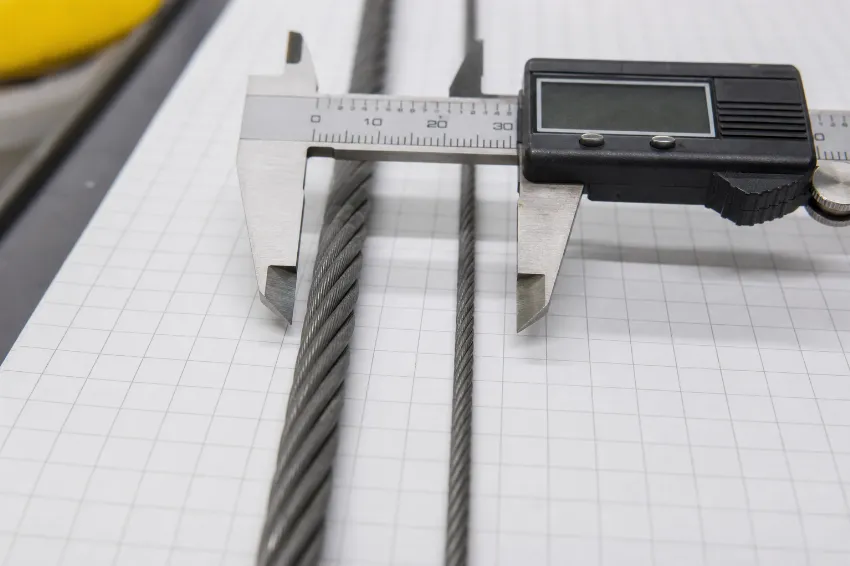
Historically, the industrial landscape lacked unified measurements. The US Bureau of Standards recorded that an article written in 1887 described over 30 gages, 19 of which were wire gages (Source: NBS Circular 31). Over the decades, the steel wire sector settled on the Washburn and Moen specifications, ensuring consistent knotting performance in automated machinery.
Be careful with the abbreviation SWG when ordering in Europe. In the UK, SWG usually means the British Standard Wire Gauge, where 10 gauge is 0.128 inches (3.25 mm) rather than 0.1350 inches. The safest way to order across markets is to specify the diameter in millimetres.
In our factory in Slovenia, every automated knotter we install is calibrated for a defined wire diameter. Operators managing continuous feed conveyors must ensure their procurement teams specify that exact diameter, as the automated twisting pinions rely on predictable wire physics to function correctly.
Steel Wire Gauge versus AWG: why the numbers disagree
AWG and the Steel Wire Gauge are two separate wire gauge systems that assign a different diameter to the same number. The American Wire Gauge (AWG) measures non-ferrous electrical conductors such as copper and aluminium, while the Steel Wire Gauge (Washburn and Moen) measures the ferrous steel used for baling wire. Because each scale was built for a different metal, a number 10 in AWG is much thinner than a number 10 in the steel gauge, and confusing the two is a frequent cause of auto-tie knot failures.
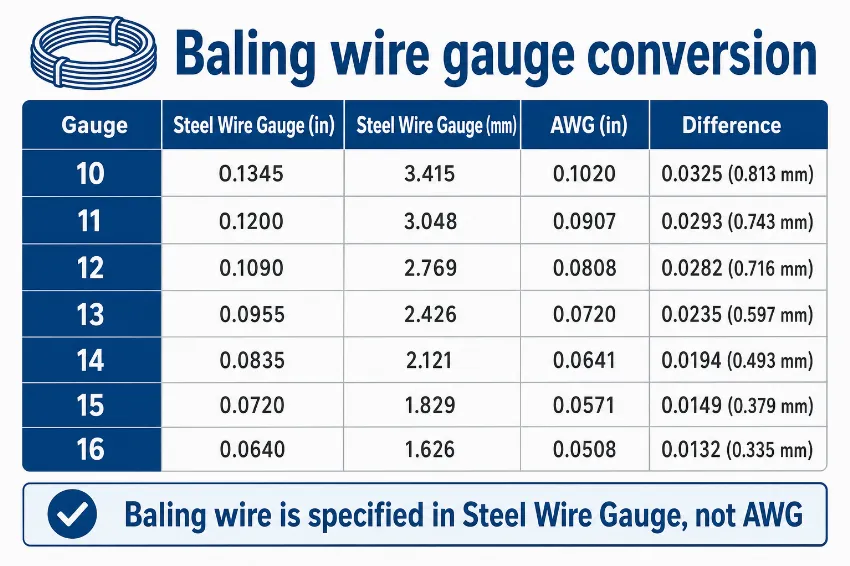
In the Steel Wire Gauge (Washburn and Moen) system used for baling wire, 10 gauge is 0.1350 in, 12 gauge is 0.1055 in, 13 gauge is 0.0915 in and 14 gauge is 0.0800 in (Source: Sizes.com wire gauges).
If a supplier erroneously fulfils an order using the AWG scale, the 10-gauge product will measure only 0.1019 inches in diameter. That wire is about 25 percent thinner and carries roughly 43 percent less steel cross-section, so its breaking load drops sharply. Undersized wire leads to knot failures under pressure, raising the cost of every bale through re-baling. Buyers should reference ASTM A510, the general requirements for carbon steel wire rods and coarse round wire, to verify the metallurgical standards of their procurement.
Gauge to millimetre conversion for European and export buyers
International recycling centres require metric conversions to match European machine specifications. A definitive baling wire size chart eliminates the guesswork when cross-referencing North American gauge numbers with metric CE-standard auto-tie systems.
The table below provides the direct conversion from the W&M steel wire gauge to millimetres, while exposing the AWG discrepancy:
| Gauge number | Steel Wire Gauge / W&M (inches) | AWG (inches, incorrect for steel) | Metric equivalent of W&M (mm) |
|---|---|---|---|
| 10 | 0.1350 | 0.1019 | 3.43 mm |
| 11 | 0.1205 | 0.0907 | 3.06 mm |
| 12 | 0.1055 | 0.0808 | 2.68 mm |
| 13 | 0.0915 | 0.0720 | 2.32 mm |
| 14 | 0.0800 | 0.0641 | 2.03 mm |
Sorting plants updating their equipment for 2026 operations must align these metric values with the acceptance criteria of their bale buyers. Steel mills and paper pulpers often reject deliveries if the binding material introduces incompatible metallurgy or excessive shedding during the un-wiring process.
Which gauge for OCC, plastics, aluminium cans and metal?
The optimal wire thickness depends directly on the physical memory and expansion force of the compacted secondary raw materials. Highly expanding materials require a lower gauge number, while dense, dead-weight materials can often be secured with thinner strands.
- OCC cardboard: Standard 12 gauge baling wire provides the ideal balance of tensile strength and flexibility for corrugated cardboard.
- Plastics (PET bottles, LDPE film): These fractions exhibit severe material memory. Containing them safely requires thick 10 or 11 gauge wire to prevent the bale from bursting inside the transport truck.
- Aluminium cans, steel cans and metal trims: Compacting used beverage cans (UBC), steel cans or edge trims involves very high specific pressing force. While many metal processors use 10 gauge wire or heavy-duty single loop bale ties, some small-format can balers compact the material so densely that the bale holds its shape without ties.
This gauge-to-material mapping applies in most cases, except when processing extremely heavy, wet municipal solid waste (MSW) wrapped in plastic film. In these edge cases, operators must implement a double-strapping or cross-tying technique rather than simply relying on a thicker single wire.
Why the wrong gauge jams an auto-tie head
Feeding an incorrect wire diameter into an automated system causes immediate mechanical interference. The cutting shears, twisting pinions and wire guides inside the tier are CAD-designed and CNC-machined to process a narrow tolerance window.
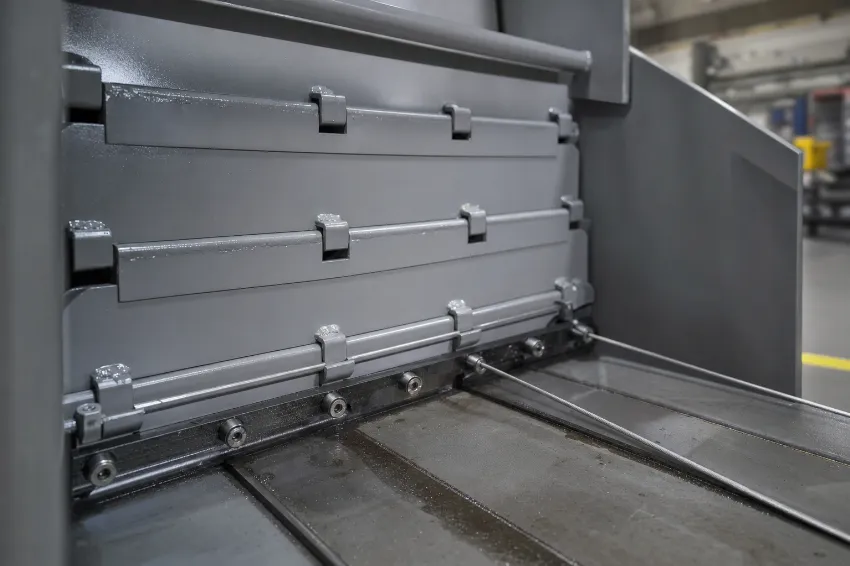
Needle slot clearance is the exact physical space machined into a tying head. This mechanical tolerance dictates the maximum wire diameter the system can process without causing damaging friction or premature wear on the guides.
When operators load 10 gauge baling wire into a system configured for 12 gauge, the thicker steel creates heavy friction inside the needle slot. This friction strains the hydraulic power unit, dulls the shear blades prematurely and triggers emergency shutdowns. Conversely, wire that is too thin slips out of the twisting pinion, creating loose, weak knots that unravel when the bale leaves the chamber.
From our engineering experience with automatic baler wire tying systems, the vast majority of operational downtime stems from inconsistent wire sourcing. Recognising the symptoms of gauge incompatibility is the first step in effective baler wire tier troubleshooting. A hydraulic wire tensioner matched to the specified diameter keeps feed tension stable and protects the knotter.
Summary
Selecting the correct tying material requires understanding that baling wire is sized in the Washburn and Moen steel wire gauge, not the electrical AWG standard. A lower gauge number equates to a thicker diameter, with 10 gauge measuring approximately 3.4 mm and 12 gauge measuring roughly 2.7 mm. Matching the exact diameter to both the baler’s mechanical tolerances and the specific waste material ensures high bale density, optimised logistics and uninterrupted machine operation.
Frequently asked questions
Is 10 or 12 gauge thicker?
In the steel wire gauge, a lower number signifies a larger physical diameter. Therefore, 10 gauge (3.43 mm) is thicker and has a higher breaking load than 12 gauge wire (2.68 mm).
What is 10 gauge in millimetres?
Based on the Washburn and Moen standard for steel, a 10 gauge wire measures 0.1350 inches in diameter, which equals approximately 3.43 millimetres.
Does heavier gauge mean fewer wires per bale?
Usually, yes. A thicker, stronger wire increases the total containment strength around the compacted material. This higher tensile capacity can allow facilities processing rigid plastics to reduce the number of wires required per bale.
What is the difference between AWG and the steel wire gauge?
AWG (American Wire Gauge) and the steel wire gauge (Washburn and Moen) are different measurement standards, so the same gauge number describes a different diameter. AWG sizes non-ferrous conductors such as copper, while the Washburn and Moen gauge sizes the steel used for baling wire. 10 gauge steel wire is 0.1350 inches (3.43 mm), whereas 10 gauge AWG is only 0.1019 inches, about 25 percent thinner, which is enough to snap knots under load. When in doubt, order by diameter in millimetres.
Need to align your tying materials with your machinery and end-market requirements? Contact ANIS Trend for a quick check of which wire gauge your baler and your bale buyer require.