


Building a high-capacity material recovery operation requires a meticulous engineering approach. Every decision, from floor layout to machinery procurement, directly impacts the facility’s throughput and long-term profitability.
An optimized industrial waste sorting plant operates as a cohesive unit where automation dictates efficiency. In this comprehensive guide, we detail the structural, mechanical, and operational frameworks necessary to establish a world-class recycling facility.
What is an automated industrial waste sorting plant?
An automated industrial waste sorting plant is a highly specialized material recovery facility (MRF) that separates mixed waste into pure, recyclable fractions. Utilizing a network of conveyors, automated screens, optical sorters, and high-capacity channel balers, these plants maximize resource recovery while significantly reducing manual labor and landfill dependency.
The foundation: why modern facilities need automated separation
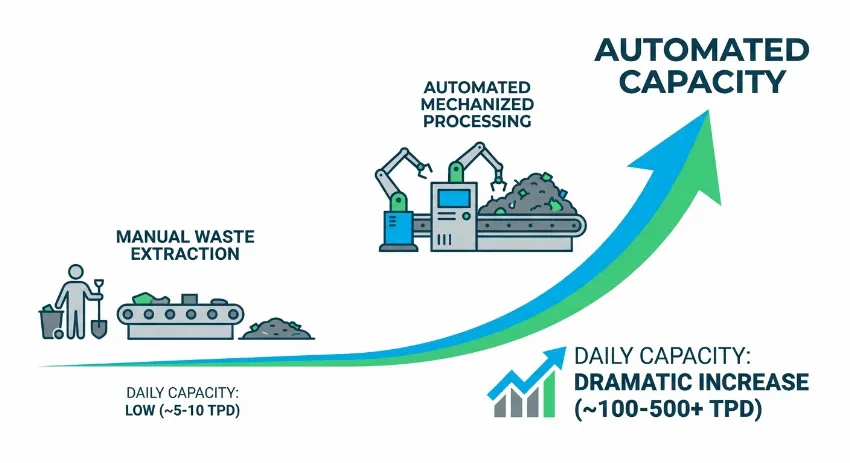
Before designing a multi-million-euro facility, decision-makers must understand the core principles of material recovery. Implementing a comprehensive strategy—and knowing waste sorting: a complete guide to how and why your business must do it—is the first step to reducing landfill dependency and creating secondary raw materials ready for the baler.
Transitioning from manual extraction to mechanized processing defines the success of a materials recovery facility (MRF). Automated separation handles massive daily tonnages that human labor simply cannot process efficiently. For a stage-by-stage walkthrough from tipping floor to finished bale, see how a modern MRF works.
Assessing the initial requirements for your recycling project
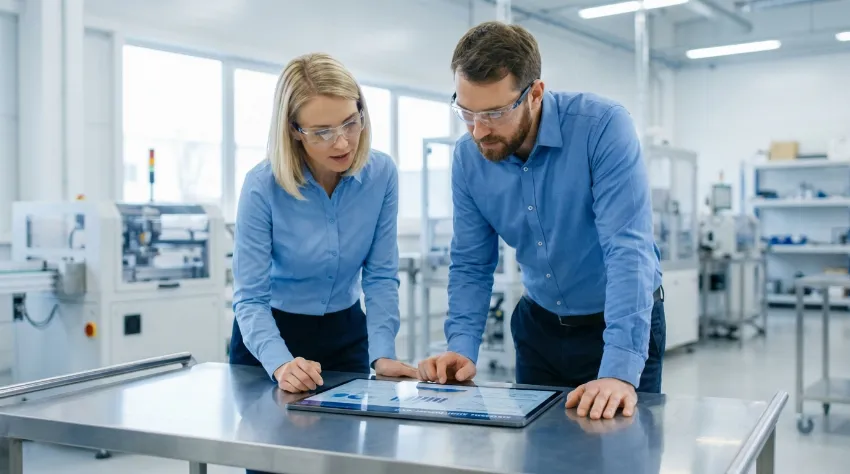
Proper facility design begins with a thorough material audit. Engineers must calculate the expected daily tonnage, bulk density, and composition of the incoming waste stream.
Regional demographics and municipal collection policies heavily influence these metrics. Analyzing existing infrastructure, such as the U.S. residential MRF map and operations, provides valuable benchmark data for sizing hoppers and conveyor speeds.
Key benefits of upgrading to an industrial waste sorting plant
Modernizing a processing facility yields immediate operational dividends. High-speed automation significantly boosts the purity rates of separated commodities like PET, aluminum, and cardboard.
Higher purity directly correlates with higher market value for the final baled product. Furthermore, according to the National Waste & Recycling Association, optimized facilities demonstrate greater resilience against fluctuating commodity prices.
Overcoming landfill dependency with smart material recovery
The primary environmental directive of any recycling plant is diverting maximum volume away from landfills. Smart material recovery targets complex, heavily mixed streams that were previously considered non-recyclable.
By implementing sequenced screening and pneumatic separation, facilities extract hidden value from municipal solid waste. This aggressive diversion strategy significantly reduces exorbitant landfill tipping fees.
How automation reduces labor costs and increases purity
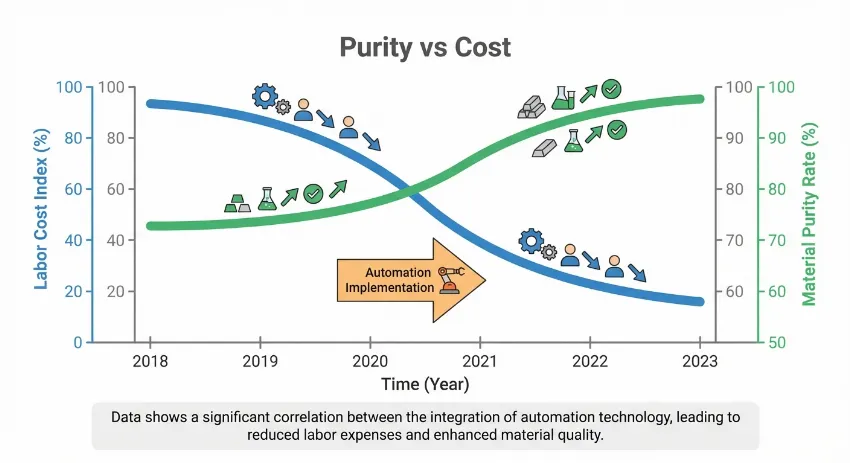
Relying on manual pickers introduces safety risks, human error, and substantial ongoing payroll expenses. Automated systems operate continuously without fatigue, ensuring a consistent processing speed.
Optical scanners and eddy current separators achieve precision separation at fractions of a second. This technological advantage guarantees that the final bales meet the strict quality standards required by paper mills and foundries.
Inside the facility: the anatomy of a sorting plant
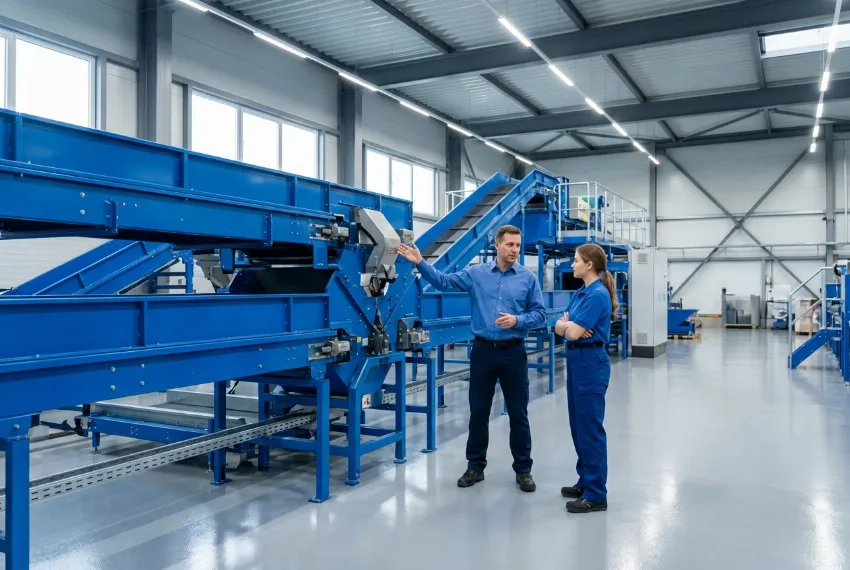
The modern Material Recovery Facility (MRF) is a marvel of engineering. For investors and operators entering this sector, understanding exactly what a waste sorting plant does from the moment mixed municipal waste is tipped onto the floor, to the final baling stage, forms the blueprint of your entire operation.
Every square meter of the processing floor must serve a distinct mechanical purpose. An intelligent plant anatomy prevents material bottlenecks and allows seamless maintenance access.
From the tipping floor to the final baling stage
Operations commence on the tipping floor, where collection trucks discharge raw material. Front-end loaders then push the waste onto a heavy-duty infeed conveyor, initiating the mechanical journey.
The material travels through a sequence of screens, magnets, and optical units, progressively stripping away distinct fractions. The residual recyclables ultimately drop into specialized bunkers before being conveyed into auto-tie channel balers for final compaction.
Layout considerations for a modern industrial waste sorting plant
Designing the physical layout demands strict adherence to spatial geometry. Engineers must account for clear heights, vehicle turning radii, and structural load-bearing limits.
Effective layouts prioritize a linear or U-shaped material flow to minimize internal transport distances. We consistently recommend allocating at least 20% additional floor space for future machinery expansion and maintenance zones.
Managing mixed municipal waste and commercial streams
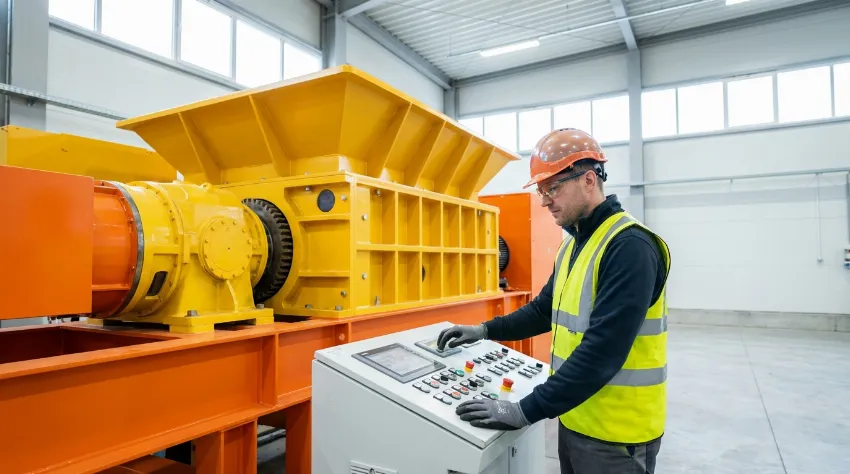
Industrial waste sorting plants frequently process dual streams requiring different mechanical approaches. Mixed municipal solid waste (MSW) typically contains high moisture and organic content, necessitating aggressive pre-screening.
Commercial and industrial (C&I) waste is generally drier but includes bulky items like timber and large plastic films. Facility managers must install robust pre-shredders to homogenize C&I streams before they enter the fine separation stages.
Integrating custom feed hoppers and conveyor belts for continuous flow
Continuous material feed prevents the heavy-duty balers from idling, which wastes energy. We design custom feed hoppers with lateral secured polycarbonate glass doors to match specific application demands.
Whether bulk-loaded or integrated with air transport systems, the hopper must supply a steady stream. Utilizing customer-specific conveyor belts ensures synchronized feeding, drastically reducing the risk of material bridging or blockages.
Equipping your plant: core technologies and systems
Because every waste stream has a different composition, no single machine can do it all. Facility engineers must evaluate the 6 types of sorting systems for industrial management to determine the perfect combination of trommels, optical sorters, and air classifiers for their specific plant layout.
Selecting durable, high-performance machinery forms the backbone of a successful facility. Substandard equipment leads to catastrophic downtime and compromised commodity quality.
Integrating automated sort lines
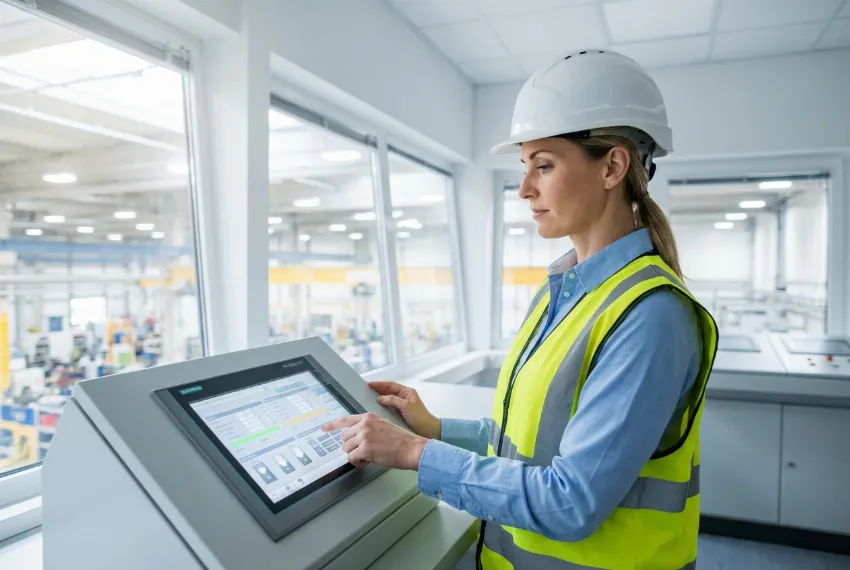
Transitioning from manual picking to automation is the fastest way to scale your facility’s throughput. Discovering how to streamline your factory with sort lines allows operators to drastically reduce labor costs while achieving a higher purity rate of separated recyclables.
A well-integrated automated line, such as the ANIS sorting lines, features centralized PLC controllers from proven manufacturers like SIEMENS. This centralization allows operators to adjust belt speeds and sorting parameters instantly from a single touch panel.
Maximizing metal recovery with magnetic separation
Protecting your heavy-duty balers and shredders from rogue metal chunks is vital for preventing downtime. Beyond protection, grasping what magnetic separation is and how it works allows plant managers to capture valuable ferrous metals, turning them into an independent and highly lucrative revenue stream.
Overband magnets suspend above high-speed conveyors to pull ferrous objects outward automatically. For non-ferrous materials like aluminum cans, eddy current separators induce magnetic fields to repel the metal into dedicated collection chutes.
Implementing optical sorters, trommels, and air classifiers
Trommel screens act as the first line of defense, separating material strictly by size. Smaller organic matter falls through the perforations, while larger recyclables continue down the line.
Further downstream, optical sorters use near-infrared (NIR) sensors to identify different plastic polymers. Air classifiers then utilize controlled airstreams to separate lightweight paper and film from heavier 3D containers.
Connecting your sorting line to heavy-duty channel baling presses
The sorting process concludes when separated materials require densification for transport. Bale quality at this stage depends on what actually reaches the infeed, so knowing how to prepare material for baling keeps contamination out of the finished bale. Connecting high-capacity bunkers to robust channel baling presses completes the automation loop.
We provide heavy-duty auto-tie channel balers equipped with high-quality hydraulic components from Parker, Bucher, and Dorninger. These machines deliver pressing forces up to 205 tonnes, ensuring maximum compaction for any material type.
Selecting the right machinery for your material stream
Procurement is the most critical phase of building your facility. Having a guide to choosing the right sorting system for your application ensures you invest in technology that directly matches your daily tonnage, moisture content, and the physical constraints of your building.
A mismatch between machine capabilities and material characteristics leads to severe operational inefficiencies. Our philosophy, driven by 25 years of experience, emphasizes tailored solutions over generic setups.
Evaluating tonnage, moisture content, and facility constraints
Machine capacity must exceed your average daily throughput to accommodate seasonal volume spikes. Processing wet municipal waste requires corrosion-resistant components and modified hopper designs to prevent clogging.
Space constraints often dictate machine selection in retrofitted recycling centers. We build very compact balers that result in significant space reduction without sacrificing pressing power.
Choosing between shear and pre-press baler technologies
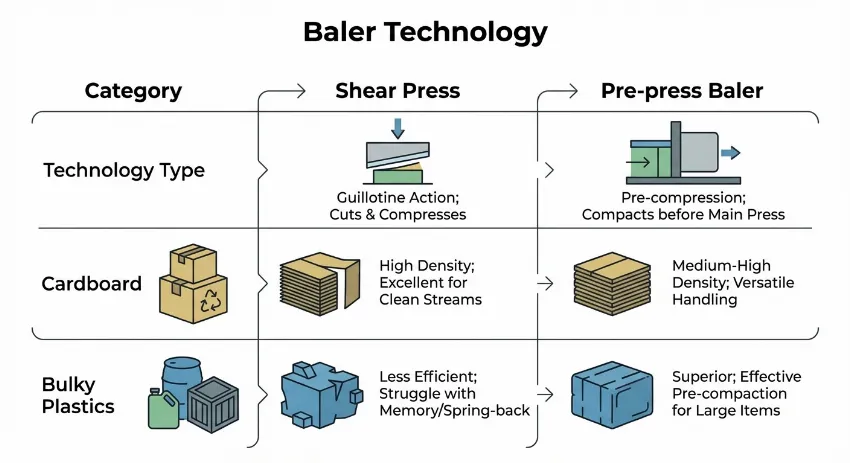
Most manufacturers push a single technology, but we offer all options to handle the widest possible range of materials. Understanding the distinction is crucial for optimizing your industrial waste sorting plant.
| Baler Technology | Best Suited Material | Key Advantage |
|---|---|---|
| Shear (Cutting) Press | Cardboard, paper, expanding materials | Fast processing with replaceable shear blades that cut oversized material at the hopper. |
| Pre-press with Single Flap | PET bottles, plastic films | Excellent pre-compaction prevents material bridging and creates well-shaped bales. |
| Pre-press with Double Lateral Flaps | Bulky plastics, MSW, heavy fractions | Requires extremely high pressing force; pushes material laterally for maximum density. |
Processing tin and steel cans with small format scrap presses
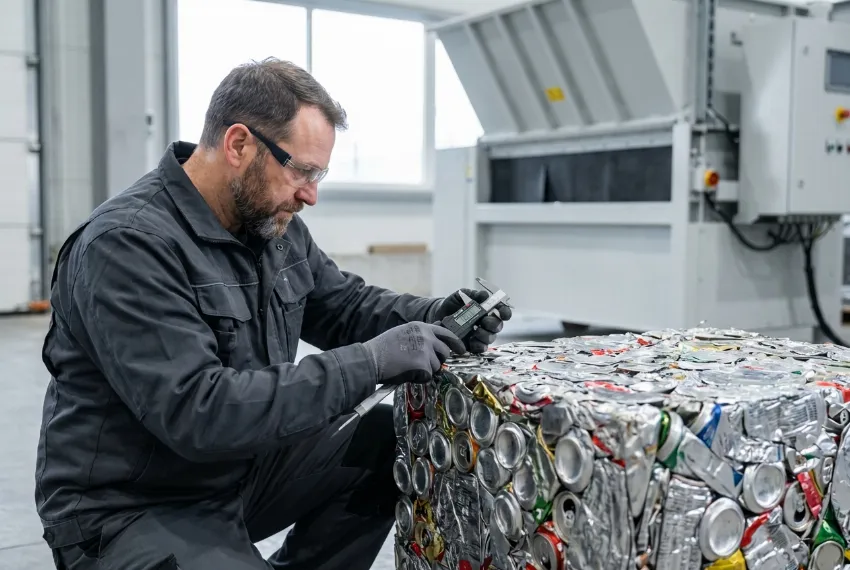
Metal processing demands specialized, indestructible machinery. An irreplaceable machine at MRF sorting plants is the small format scrap metal baler, designed for efficient compression of tin UBC/steel cans and edge trims.
Our front-door-working fully automatic can crusher utilizes solid material compaction, eliminating the need for bale ties. The final product is a highly dense bale measuring 40 x 40 x (10-30) cm, suitable for direct use by foundries.
Ensuring durability with Hardox wear plates and premium hydraulics
Abrasive materials like glass and scrap metal relentlessly degrade standard steel components. We counteract this by utilizing HARDOX wear-resistant steel for all internal coatings and changeable wear plates.
The bolted fixing ensures easy and quick replacement, drastically increasing lifetime and durability. Paired with special hydraulic cylinders with hard-chromed rods, the equipment handles rigorous continuous operation effortlessly.
Advanced plant optimization for complex materials
Standard MRF setups often struggle with unconventional waste like industrial textiles. Overcoming the ‘memory effect’ of fabrics requires optimizing industrial sorting plants with heavy-duty textile recycling equipment, ensuring that complex materials are efficiently processed and fed into specialized channel balers.
Plant optimization extends beyond initial installation. It requires continuous refinement of software and mechanical settings to address evolving packaging trends.
Handling industrial textiles and overcoming the memory effect
Textiles possess a unique structural memory, causing them to expand aggressively after compression. Standard balers fail to contain this expansion, resulting in broken wires and collapsed bales.
Processing these materials requires channel balers with extended pressing rams and specialized retention dogs. This specialized engineering prevents material spring-back, securing dense, stackable bales.
Strategies for processing multi-material bales efficiently
Facilities rarely process just one material type throughout the day. Seamlessly transitioning from baling cardboard to plastics demands inherent baling flexibility and multi-materiality.
We provide equipment that allows operators to switch off wire strapping manually when pressing scrap metal, then quickly reactivate it for paper. This versatility prevents the need for parallel, redundant baling lines.
Adjusting software controls for frequent material changes
Modern baling requires intelligent software optimally adjusted for different materials. This guarantees high bale quality even when the infeed stream changes hourly.
Our intuitive Touch Panel facilitates the operation of the machine through advanced recipe management. Operators simply select the incoming material profile, and the SIEMENS PLC automatically adjusts hydraulic pressure and wire-tie settings.
Maintaining your industrial waste sorting plant for maximum uptime
Preventative maintenance is the absolute safeguard against revenue-draining downtime. Our horizontal wire tie system makes cleaning the system remarkably easy while guaranteeing better operator safety.
- Implement daily visual inspections of shear blade segments.
- Monitor hydraulic fluid temperatures and change filters regularly.
- Keep optical sensor lenses clean to ensure precise material identification.
- Replace bolted HARDOX wear plates before foundational steel damage occurs.
Turning waste management into a profitable operation
The ultimate goal of setting up a sorting facility is achieving a fast return on investment. Once your automated systems are dialed in, you will quickly realize how efficient waste sorting can transform your profitability, lowering operational costs and maximizing the market value of your high-density bales.
Profitability hinges on balancing initial capital expenditure with long-term operational savings. A well-designed industrial waste sorting plant transforms environmental compliance into a lucrative business model.
Calculating the return on investment for your automated facility
Evaluating ROI requires analyzing the reduction in labor costs against the increased revenue from high-purity commodity sales. Automated plants capture valuable fractions that manual facilities entirely miss.
Furthermore, minimizing landfill disposal fees generates massive direct savings. Due to their long-established design, our robust balers do their job faster and offer the best ROI in the market.
Achieving optimal truck loading with highly compacted bales
Logistics and transport represent a massive overhead in waste management. Shipping loosely compacted material means you are paying to transport empty air.
Our compaction process with high-specific pressing force results in special high bale density. Optimally shaped, stackable bales guarantee efficient full truck loading, drastically reducing the number of required shipping trips.
Lowering energy consumption with tailored hydraulic power packs
Heavy machinery consumes significant electrical power, directly impacting operational margins. To combat this, we develop machines to achieve the optimal ratio of hourly performance to energy consumption.
We supply compact hydraulic balers with energy-efficient and noise-optimized main drives. These tailored power packs draw maximum current only during the critical compaction phase, conserving energy during idling periods.
Securing long-term profitability with reliable equipment
Frequent machinery breakdowns destroy sorting plant profitability through stalled production and expensive emergency repairs. Purchasing durable, over-engineered equipment eliminates these erratic costs.
The processing of high-quality materials guarantees long-lasting products with a very low susceptibility to faults. Should faults occur, our intelligent technologies allow us to rectify them quickly via modern telephone-based services in 95% of cases.
Building a future-proof industrial waste sorting plant
Waste composition changes constantly as packaging manufacturers shift towards new polymers and composites. A facility designed today must possess the mechanical flexibility to handle the waste streams of the next decade.
Investing in modular sorting technologies allows for easy integration of next-generation robotic sorters. Future-proofing protects your initial capital investment against rapid technological obsolescence.
Partnering with experienced machine-building experts
Executing over 350 different installations around the world has provided us with unparalleled field experience. We operate as a family business, ensuring a high level of manufacturing and personal commitment to every project.
Partnering with seasoned experts eliminates the trial-and-error phase of plant commissioning. Our team provides comprehensive customer advice, overseeing the project from AutoCAD design to final site integration.
Meeting international safety and quality standards
Operating heavy machinery necessitates uncompromising adherence to industrial safety protocols. An enclosed construction provides the maximum level of safety for facility workers.
All our equipment carries CE marking, and ANIS is certified to the ISO 9001:2015 quality-management standard. Additionally, the electrical systems are protected by double contact breaker isolation.
Integrating smart baler accessories for easier maintenance
We adjust baler accessories to optimize baling, bale removal, maintenance, and safety. Integrating optional tipping devices drastically improves internal logistics and material handling.
Furthermore, incorporating specialized service platforms and localized safety lockouts protects operators during routine cleaning. These smart additions streamline daily operations without sacrificing output speed.
Leveraging intelligent technologies to conserve resources
Modern machine building must align with global sustainability goals. Intelligent technologies enable the highest level of product performance while conserving hydraulic fluids and electrical power.
We are deeply committed to preserving valuable materials. By designing systems that require minimal consumable replacements and operate efficiently, we ensure your sorting plant remains environmentally and economically sustainable.
Conclusion: securing your recycling future
Designing and constructing an automated industrial waste sorting plant is a highly complex engineering endeavor. Success relies entirely on selecting robust separation technologies and integrating them seamlessly with high-capacity baling systems.
By prioritizing automation, heavy-duty construction, and intelligent software control, operators can drastically reduce labor overhead while maximizing material purity. Ultimately, partnering with an experienced machinery manufacturer guarantees a durable, high-yield facility capable of adapting to future recycling demands.
Frequently Asked Questions (FAQ)
How much space is required for an automated sorting facility?
The required footprint depends heavily on the targeted daily tonnage and the complexity of the material stream. While small format scrap presses can fit into cramped spaces, a full-scale automated plant processing municipal solid waste typically requires several thousand square meters to accommodate tipping floors, conveyors, optical sorters, and bunker storage.
Which baler technology is best for mixed industrial waste?
Mixed streams often contain bulky, rigid items that resist standard compaction. For maximum efficiency, we recommend an auto-tie channel baler utilizing a pre-press method with double lateral flaps, combined with extremely high pressing forces (up to 205 tonnes), to ensure dense, stackable bales.
Can an existing manual facility be upgraded to an automated plant?
Yes, manual facilities can be retrofitted with automated sort lines. By integrating targeted equipment like optical sorters and heavy-duty conveyors step-by-step, plant managers can increase throughput and purity without entirely halting existing operations.
How do you prevent metal from damaging the baling press?
Implementing aggressive magnetic separation early in the sorting line is critical. Overband magnets and eddy current separators extract ferrous and non-ferrous metals before they reach the baler, protecting the hydraulic rams and generating a separate, profitable material stream.