


A plastic baler machine, also called a plastic baling machine, is a hydraulic press that compresses loose PET bottles, plastic film, HDPE containers and other plastic waste into dense, wire-tied bales. Baled plastic takes up a fraction of the floor space, fills trucks to their weight limit and can be sold to recyclers instead of being paid for as waste. This guide explains how a plastic baler machine works, the main machine types, the features that decide bale quality, what a plastic baler machine costs and how to calculate its ROI.
ANIS has designed and built balers for more than 25 years. If you already know your material and volume, see our plastic balers for PET, HDPE, film and foam.
If you are dealing with material expansion (memory effect) in PET bottles, film or HDPE, read our guide to baling PET bottles, film and HDPE.
Table of Contents
What is a plastic baler machine and how does it work?
A plastic baler machine is a piece of recycling equipment designed to compress loose plastic waste into dense, uniform, and easy-to-handle bales. This process is fundamental for any organization looking to manage its plastic scrap more efficiently.
Understanding the core function of a plastic baling press
At its heart, a plastic baling press operates on a simple principle. Loose plastic material, such as bottles, film, or containers, is fed into a chamber. A powerful hydraulic ram then moves forward, compacting the material against a solid, fixed wall.
Once a sufficient amount of material is compressed to a pre-set density, the bale is tied off, typically with wire, and ejected from the machine. The result is a compact, stackable block of plastic that is ready for storage, transport, and recycling.
The primary benefits of using a recycling baler for plastic
Integrating a dedicated plastic baler into your operations delivers a range of significant advantages. These benefits impact not only your bottom line but also your operational efficiency and environmental footprint.
- Significant Space Savings: Compacted bales occupy a fraction of the space of loose plastic waste, freeing up valuable floor space.
- Reduced Transport Costs: Densely packed bales allow for optimal truck loading, drastically reducing the number of required shipments and associated fuel costs.
- Lower Disposal Fees: By diverting plastic from landfills and instead preparing it for recycling, you can substantially cut down on waste disposal expenses.
- New Revenue Streams: Baled plastic is a valuable commodity that can be sold to recycling facilities, turning a waste product into a source of income.
- Improved Workplace Safety: Containing loose plastic reduces trip-and-fall hazards and minimizes fire risks, creating a cleaner and safer work environment.
Which industries can benefit most from a plastic baler
The application for plastic balers is incredibly broad, spanning numerous sectors that generate significant plastic waste. Key industries include:
- Material Recovery Facilities (MRFs)
- Municipal and private recycling centers
- Plastics manufacturing and processing plants
- Distribution centers and logistics hubs
- Large retail and grocery stores
- Packaging companies
- Food and beverage producers
Choosing the right type of plastic baler for your needs
The two main types of plastic baler are vertical and horizontal. Vertical balers suit lower volumes and tight floor space with manual tying, while horizontal balers handle continuous, high-volume streams with automatic wire-tie systems. The table below summarizes how they compare, and the sections that follow explain each in detail.
| Factor | Vertical baler | Horizontal baler |
|---|---|---|
| Best for volume | Low to medium waste streams | High, continuous waste streams |
| Footprint | Compact, small floor area | Large, needs dedicated space |
| Feeding | Manual, loaded from the front | Continuous, often via conveyor |
| Bale tying | Usually manual | Usually automatic |
| Throughput | Lower | High |
| Typical users | Retail stores, small manufacturing sites | MRFs, distribution centers, high-output factories |
| Entry cost | Lower | Higher |
Vertical plastic balers for smaller waste streams
Vertical balers are characterized by their smaller footprint, making them ideal for facilities with limited space. In these machines, the material is loaded from the front, and the hydraulic ram moves downwards to compact the waste. They are typically best suited for lower volumes of waste and often involve manual bale tying. Businesses like retail stores or small manufacturing sites often find this to be a cost-effective entry point into baling.
Horizontal plastic baler machines for high-volume operations
For large-scale operations such as MRFs, distribution centers, or high-output factories, horizontal balers are the industry standard. These machines are fed continuously, often by a conveyor system, and feature a horizontal ram. Their design is built for high throughput and automation, almost always including an automatic wire-tie system that significantly reduces labor requirements and maximizes efficiency. ANIS channel baling presses are built for this kind of continuous operation.
Specialized balers for specific plastic types like PET and HDPE
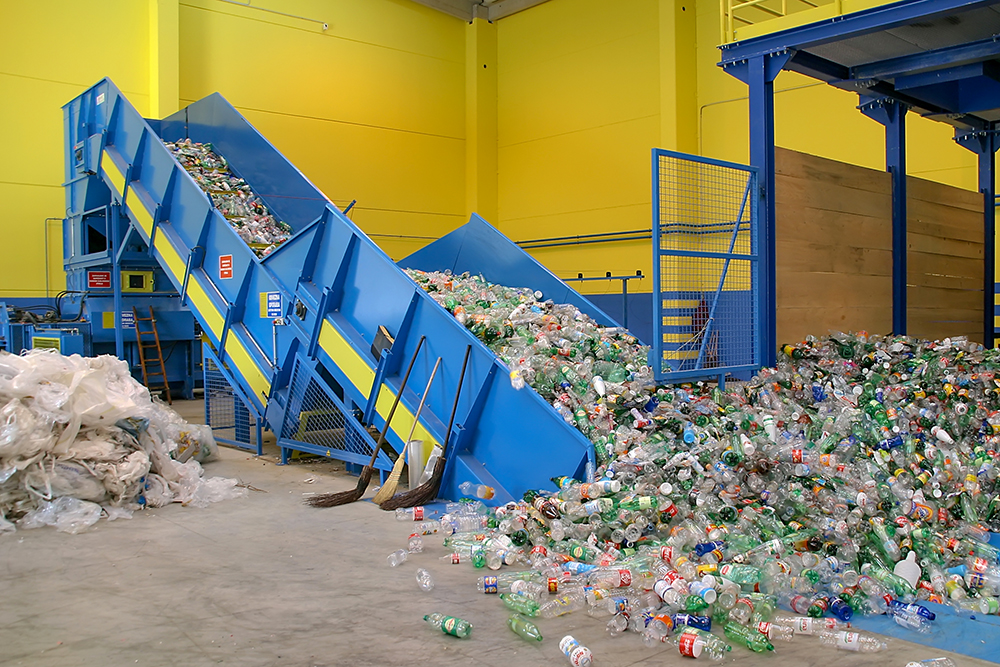
Certain plastics present unique challenges. Materials like PET bottles and plastic film have a high “memory” and a tendency to expand after compaction. For these applications, a baler equipped with pre-press technology, such as a single or double-flap system, is often superior. This technology pre-compacts the material in the hopper before the main ram stroke, resulting in a denser, more stable bale. ANIS plastic balers can also be fitted with a PET bottle perforator that is built into the feed opening and switches in and out automatically when the operator selects a different material.
Conversely, a stream of mixed rigid plastics might be better handled by a shear baler, which uses a powerful knife to cut off excess material before compaction. The key is to match the technology to the material, a philosophy that is central to achieving optimal results. The table below shows when each technology fits best.
| Technology | Best for | How it works | Key benefit |
|---|---|---|---|
| Pre-press | PET bottles, film, HDPE and other high-memory plastics | Pre-compacts material in the hopper before the main ram stroke | Denser, more stable bales that resist expansion |
| Shear | Mixed and rigid plastics with irregular shapes | A powerful knife cuts off excess material before compaction | Handles bulky, uneven streams and protects the ram |
For a step-by-step decision between these technologies and between vertical and horizontal machines, read our article on choosing the right plastic baler.
What to check before buying a plastic baler machine
Beyond the basic type, several critical features determine a baler’s performance, longevity, and suitability for your specific application. For a feature-by-feature checklist with ANIS reference values, see our article on plastic baler features.
Determining the right size and capacity for your facility
Capacity is measured in throughput, the amount of material the baler can process per hour. It’s crucial to analyze your current and projected waste generation rates to select a machine that can keep pace with your operations without becoming a bottleneck. An undersized baler will lead to backlogs, while an oversized one represents an unnecessary capital expense.
The importance of bale density and weight
The ultimate goal of a baler is to produce heavy, dense, and uniformly shaped bales. Why? Because bale weight and density directly correlate to shipping efficiency. Maximizing the weight of each bale ensures that every truck leaving your facility is loaded to its legal weight limit. This simple factor can be the single most significant driver in reducing your transportation costs and maximizing the sale value of your recycled material.
As a reference, ANIS plastic balers press PET packaging into bales of up to 110 x 75 x 120–150 cm weighing 400–500 kg, which allows more than 22 tonnes to be loaded into a 40-foot container. For typical bale weights of film, HDPE and other materials, see how much a bale weighs.
Essential safety features of a modern plastic compactor machine
Modern industrial balers must adhere to strict safety standards to protect operators. Look for fully enclosed construction, emergency stop buttons, safety interlock systems on all access doors, and clear operational warnings. Before anyone clears a jam or services the machine, it must be isolated and locked out following OSHA lockout/tagout procedures. A safe machine is a productive machine.
Manual vs. automatic tie systems on a waste plastic baler
For low-volume vertical balers, manual tying is standard. However, in any high-volume horizontal baler application, an automatic tie system is essential. This feature automates the process of wrapping and tying the bale wires, dramatically increasing throughput and freeing up personnel for other tasks. A robust and reliable horizontal wire-tie system is a hallmark of a high-quality industrial baler. The wire matters as much as the tier: plastic bale buyers usually specify galvanized wire, as explained in our baling wire guide.
The financial and operational advantages of a plastic baler machine
Investing in a plastic baler is not an expense; it is a strategic investment in operational efficiency and financial returns. The economic case is compelling and multifaceted.
How to calculate the ROI of your plastic baler
Calculating the return on investment (ROI) provides a clear picture of the baler’s financial viability. A basic calculation involves:
ROI = (Revenue from Bales + Cost Savings) / Total Investment Cost
Cost savings include reduced waste hauling fees, lower labor costs (with automated systems), and more efficient use of space. As noted in research on the economics of plastic waste in a circular economy, efficient processing at the source is a key driver of profitability. For a worked example with labor and freight figures, see our baler ROI calculation.
Reducing waste disposal costs and generating new revenue
The financial impact is twofold. First, you immediately reduce or eliminate the significant costs associated with sending loose plastic to a landfill or third-party processor. Second, you transform that waste stream into a marketable commodity. Recycling facilities pay for clean, dense, and well-sorted bales of plastic, creating a consistent new source of revenue for your business.
Improving workplace safety and cleanliness with a baler
An often-overlooked benefit is the dramatic improvement in facility organization. Containing loose plastic waste in compact bales eliminates clutter, reduces trip hazards, minimizes dust, and lowers the risk of fire. A cleaner, more organized workspace is inherently a safer and more productive one.
Frequently asked questions about plastic baler machines
Here are answers to some of the most common questions we encounter from businesses considering a baler.
How much does a plastic baler machine cost?
The cost of a plastic baler varies significantly based on its type, size, level of automation, and features, so there is no single plastic baling machine price. Price scales with capacity and automation: a small used vertical baler sits at the lower end, while a large, fully automated horizontal baler with a conveyor system is a significant capital investment. The table below shows how configurations compare in relative terms.
| Configuration | Relative investment | Typical fit |
|---|---|---|
| Used vertical baler | Lowest | Small retailers testing baling for the first time |
| New vertical baler | Low to medium | Retail and small manufacturing with steady low volumes |
| Semi-automatic horizontal baler | Medium to high | Growing facilities with rising, continuous volumes |
| Fully automatic horizontal baler with conveyor | Highest | MRFs and high-output plants needing maximum throughput |
It is crucial to view the price in the context of its long-term ROI, not as a standalone cost. Because specifications drive the final figure, request a tailored quote based on your material and volume rather than relying on a list price.
As an orientation point, the U.S. EPA’s baler guide gives about $5,000 for some small vertical cardboard balers and $25,000 or more for larger multi-material units, excluding shipping and installation. Fully automatic horizontal balers for industrial plastic streams sit well above these figures.
What maintenance is required for a plastic baling press?
Like any piece of heavy machinery, regular maintenance is essential for longevity and peak performance. This includes daily visual inspections, regular cleaning of the wire-tie system, periodic lubrication, and monitoring of hydraulic fluid levels. Choosing a baler built with high-quality components and wear-resistant materials like HARDOX® steel can significantly reduce the frequency and cost of maintenance over the machine’s life.
Can you bale different materials in a plastic baler?
While a baler is often purchased for a primary material like plastic, flexibility is a major advantage. High-quality plastic balers are often engineered for multi-material use, capable of efficiently processing cardboard, paper, and other recyclables. This flexibility is achieved through advanced software and robust construction, allowing a single machine to handle diverse waste streams, which maximizes its utility and value.
If your operations generate multiple types of waste, investing in a versatile, multi-material baler is one of the most effective decisions you can make.
At ANIS Trend, we believe in providing solutions driven by experience. If you are ready to transform your waste management strategy from a cost center into a valuable operational asset, our team is here to help. We will work with you to analyze your materials and recommend the precise baling technology to meet your needs.
Contact us today to speak with an expert and discover the perfect baling solution for your business.