


For any business that generates a significant amount of cardboard—from manufacturing plants and grocery stores to large retail operations—managing this bulky waste stream is a constant operational challenge. Piles of empty boxes quickly consume valuable floor space, create potential safety hazards, and, most critically, lead to surprisingly high disposal and transportation costs.
While many see waste management as a necessary expense, forward-thinking companies view it as an opportunity for optimization. A high-quality cardboard baler isn’t just a piece of equipment for crushing boxes; it’s a strategic tool that fundamentally transforms your operational efficiency, safety, and financial bottom line. It goes far beyond simple compaction to directly address one of the biggest hidden expenses in logistics: the cost of transporting air in half-empty waste containers.
What is a cardboard baler and how does it work?

At its core, a cardboard baler is a machine that uses immense hydraulic pressure to compress recyclable materials into dense bales. This is the foundational step in any industrial waste logistics optimization strategy, making the material far easier to handle, store, and transport.
This process makes the material far easier to handle, store, and transport for recycling. According to the U.S. Environmental Protection Agency, balers significantly enhance recycling efficiency by condensing materials like cardboard into manageable bales, streamlining the handling and transportation process for recycling facilities EPA’s Guide to Balers.
The basic mechanics of a cardboard baling machine
The operational principle is straightforward yet powerful. An operator loads cardboard waste into the machine’s feed hopper. Once the chamber is full, a large hydraulic ram, or platen, extends to compact the material with significant force. This process is repeated until a full-sized bale is formed.
When the bale reaches the desired size, the machine signals the operator. The operator then manually or automatically guides baling wire or strapping around the bale to secure it. Finally, the chamber door is opened, and a bale ejector system pushes the finished, tightly bound bale out of the machine, ready for storage or shipment. The entire process, known as the cycle time, is designed for efficiency and minimal operator intervention.
Key components of a cardboard recycling baler
While models vary, most industrial balers share a common set of robust components engineered for longevity and performance. Understanding these parts helps in appreciating the machine’s quality and functionality.
- Hydraulic Power Unit: The heart of the machine, this unit, often side-mounted to save space, contains the motor and hydraulic pump that generate the immense force needed for compaction. Quality hydraulics are essential for reliability and a long service life.
- Platen: This is the heavy steel plate, driven by the hydraulic cylinders, that physically compacts the cardboard.
- Baling Chamber: The main body of the machine where the cardboard is loaded and compressed. Its dimensions & structural integrity are critical, which is why leading manufacturers use wear-resistant materials like HARDOX®.
- Tying Mechanism: This can range from a simple manual front tie-off system with slots for wire to fully automated systems in auto tie balers that wrap and cut the wire without operator assistance.
- Bale Ejector: A system, often powered by a chain or hydraulics, that safely and easily pushes the finished, heavy bale out of the chamber.
- Control Panel: The machine’s brain, featuring controls like the emergency stop button, platen controls, and a lockable electrical disconnect switch for safe maintenance.
Baler vs. compactor: Understanding the key difference
The terms “baler” and “compactor” are often used interchangeably, but they describe machines with fundamentally different purposes and outcomes. A compactor simply crushes waste into an open-top container to reduce its volume for landfill disposal. It mixes various waste products together.
A baler, however, is a key component in a recycling companies‘ supply chain. It segregates a single material stream—like cardboard—and produces dense, tied bales. These bales are not trash; they are valuable commodities that can be sold, creating a new revenue stream and diverting waste from landfills.
The major benefits of investing in a cardboard baler
Integrating a baler into your operations delivers a powerful return on investment that extends across multiple areas of your business, from finance to workplace safety.
Significantly reduce your waste disposal costs
This is the most immediate and impactful benefit. Un-baled, loose cardboard takes up immense space in a dumpster. By compacting this material into dense bales, you can reduce the volume by a ratio of up to 10:1. This means far fewer waste collection pickups are needed, drastically lowering your hauling fees. Optimally sized bales ensure that every truck leaving your facility is fully loaded, maximizing transport efficiency and minimizing cost per kilogram.
Create a new revenue stream from baled cardboard
Baled cardboard isn’t just waste; it’s a sought-after raw material. Recycling centers and paper mills pay for clean, densely baled cardboard. By producing high-quality, stackable bales, you turn a disposal cost into a consistent source of income. This revenue can often be significant enough to pay for the cardboard baler cost itself over time, delivering an excellent ROI.
A study by the Ohio Environmental Protection Agency demonstrates that recycling programs, including those utilizing baled cardboard, can generate substantial economic benefits through reduced disposal costs and revenue from recyclable materials Economic Impact Potential of Recycling in Ohio.
Improve workplace safety and organization
Piles of loose cardboard are a significant fire hazard and can create trip-and-fall risks for employees. A dedicated cardboard baler system centralizes waste management, keeping floors clear, aisles open, and work areas tidy. The Occupational Safety and Health Administration (OSHA) highlights that proper use of balers reduces workplace hazards, such as trips, falls, and fire risks, by effectively managing cardboard waste OSHA’s Green Job Hazards: Cardboard Baling.
This commitment to organization and adherence to safety and operating features demonstrates a proactive approach to workplace safety.
Enhance your business’s sustainability efforts
In today’s market, corporate responsibility matters. Implementing a robust cardboard recycling program showcases your commitment to sustainability. It diverts tons of material from landfills, conserves natural resources, and reduces your company’s carbon footprint—a powerful message for customers, partners, and employees alike.
Types of cardboard balers explained
Choosing the right type of baler depends entirely on your operational scale, material volume, and available space. The two primary categories are vertical and horizontal balers.
Vertical balers: The ideal choice for most businesses
A vertical cardboard baler is the most common type found in retail stores, hotels, and small to medium-sized manufacturing facilities. They have a smaller footprint, making them ideal for locations where space is a premium. Material is loaded through the front door, and the platen moves downwards to compact it. They are perfect for operations that produce a steady but not overwhelming volume of cardboard.
Horizontal balers: For high-volume industrial needs
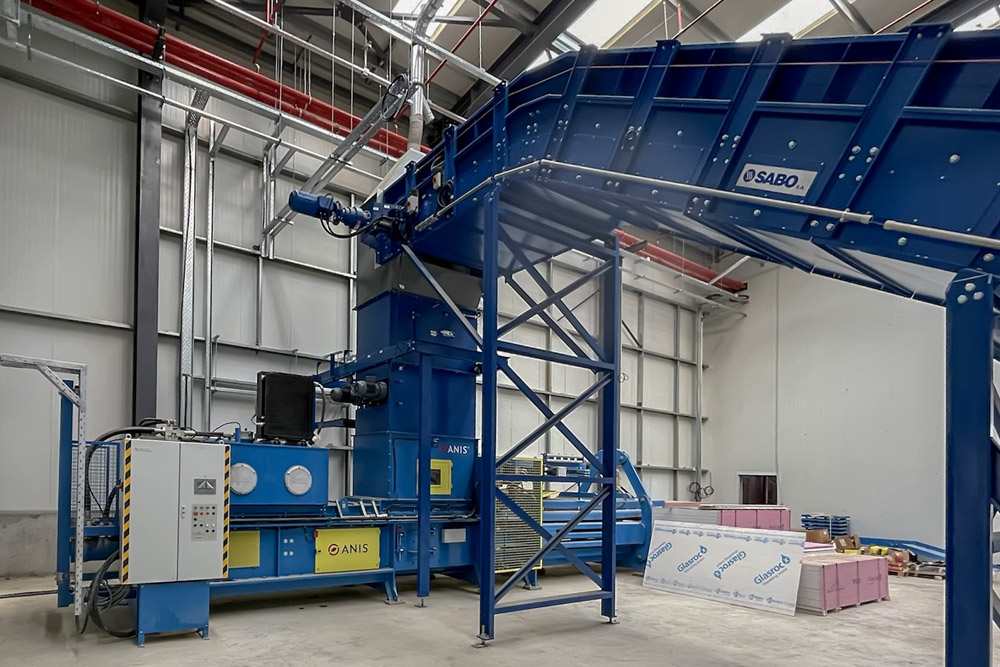
For large-scale operations like warehousing and distribution centers, large recycling facilities (MRFs), or major manufacturing plants, a horizontal baler is the industry standard. These machines are designed for high-throughput and continuous operation.
Material is typically fed into a large hopper via a conveyor belt, and the platen moves horizontally to compact it. Many models, like an auto-tie horizontal baler, are fully automated, from feeding to tying and ejecting, requiring minimal labor. At ANIS, we specialize in these robust auto-tie channel balers, providing customized solutions for the most demanding applications.
Multi-chamber balers for segregating materials
For businesses that need to handle multiple waste streams, such as cardboard, shrink wrap, and plastic bottles, a multi-chamber baler is an efficient solution. This design features two or more chambers side-by-side, allowing operators to sort and bale different materials simultaneously without cross-contamination.
How to choose the right cardboard compactor for your business
Selecting the right machine is a critical decision. A proper assessment ensures you invest in a baling system that meets your needs today and can scale with your business tomorrow.
Evaluating your volume and type of cardboard waste
The first step is a thorough analysis of your waste stream. How many boxes do you generate daily or weekly? What are their sizes? A professional solution design starts here. Many equipment providers offer a complimentary site survey to help you accurately quantify your needs and identify the best placement for the machine.
Considering bale size, weight, and density requirements
The specifications of the final bale are crucial. Your recycling partner may have specific requirements for bale size and bale weight to ensure efficient transportation and processing. Higher density bales are generally more valuable and further optimize shipping costs. You need a machine capable of producing bales that meet these market demands.
Assessing your operational space and power needs
Practical considerations are just as important. Do you have adequate floor space for the baler and for storing the finished bales? Is the required three-phase power available? A detailed review of the machine’s footprint and power specifications will prevent installation surprises.
Getting started with your new baling machine
Once you’ve selected your baler, proper implementation is key to maximizing its benefits and ensuring a safe working environment.
Important safety training for operating a baler
No employee should operate a baler without comprehensive operator training. This training must cover all machine functions, safety interlocks, proper loading procedures, the tying process, and emergency protocols. Always follow the manufacturer’s safety instructions to the letter.
A simple maintenance checklist for your cardboard baler
Modern balers are built for durability, but routine care is essential for longevity. Simple maintenance guidelines can prevent costly downtime.
- Daily: Check the area for debris and ensure safety guards are in place.
- Weekly: Perform routine inspections of the baling wire or strapping supply. Check hydraulic hoses for any signs of leaks or wear.
- Monthly: Conduct hydraulic oil checks to ensure the fluid is at the correct level and clean.
- Annually: Schedule a professional service to inspect all components, as recommended by the manufacturer’s maintenance and care plan. This often aligns with the 1-year labor warranty or 2-year part warranty.
Tips for maximizing your baling efficiency
To get the most out of your investment, encourage best practices among your team. Always flatten boxes before loading them into the chamber; this reduces the number of compression cycles needed. Maintain a consistent and steady feed rate to optimize the machine’s performance. Finally, ensure operators are using the correct tying technique to produce secure, stable bales every time.
Frequently Asked Questions (FAQ)
What is the typical return on investment (ROI) for a cardboard baler?
The ROI for a cardboard baler is typically very strong, often realized within 12 to 24 months. It’s driven by two main factors: the significant reduction in waste hauling fees and the new revenue generated from selling the baled cardboard. A complimentary site survey can help project a more accurate ROI based on your specific volumes and local recycling rates.
How much does an industrial cardboard baler cost?
The cardboard baler cost varies widely based on type, size, and features. Smaller vertical balers can start in the thousands of dollars, while large, automated horizontal balers are a more significant capital investment. The key is to evaluate the long-term savings and revenue, not just the upfront price. A quality machine with a long lifespan and strong warranty coverage offers the best value.
What kind of maintenance does a cardboard baler require?
Routine maintenance is crucial for longevity and safety. This includes daily visual checks, weekly inspections of hydraulic lines and wire systems, and periodic checks of the hydraulic fluid. Following the manufacturer’s recommended maintenance and care schedule is the best way to ensure reliable operation and protect your investment.
Can I bale other materials in a cardboard baler?
Yes, many balers are multi-material capable. Depending on the model and pressing force, you can often bale materials like plastic film, shrink wrap, and plastic bottles. At ANIS, our channel balers are renowned for their multi-material flexibility, with software that can be adjusted to guarantee high bale quality even when the material is frequently changed.
Ready to turn your cardboard waste from a costly problem into a profitable asset? Our team of experts is here to help. With decades of experience, we provide baling solutions driven by experience, not by a one-size-fits-all catalog. We will analyze your needs and engineer a robust, tailor-made baling system that optimizes your entire workflow. Contact us today for a complimentary consultation and quote.